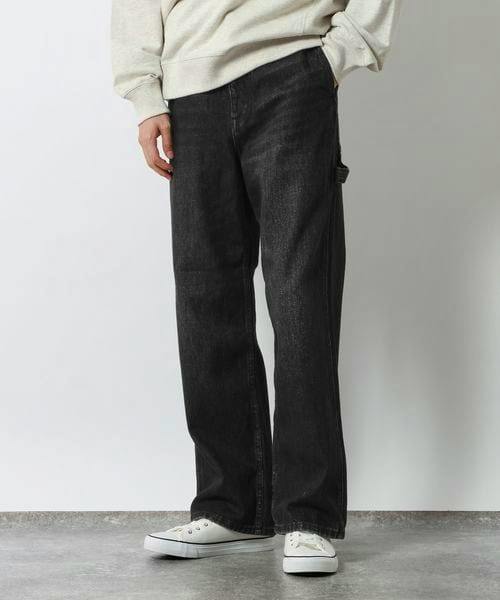
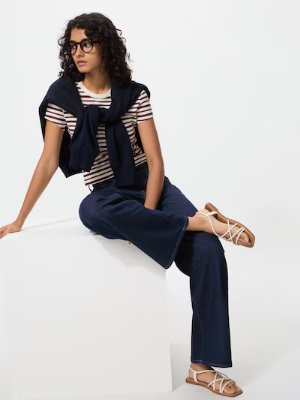
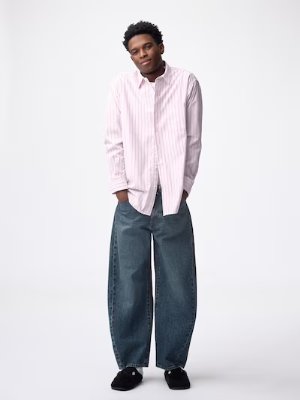
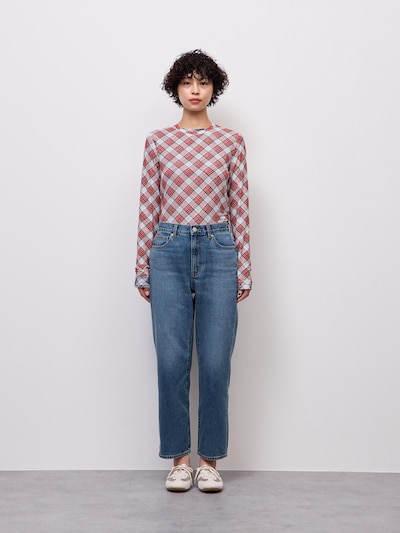
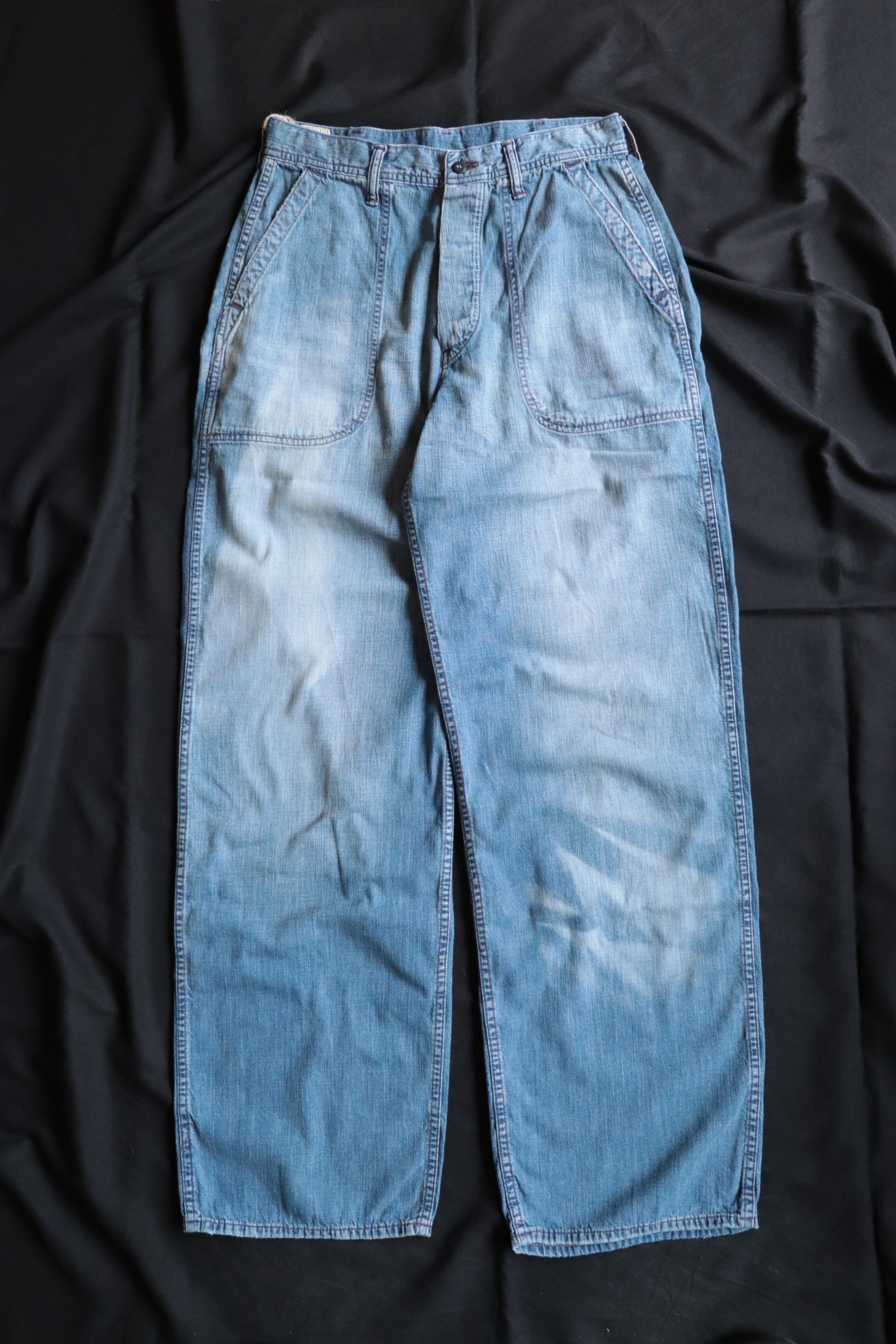
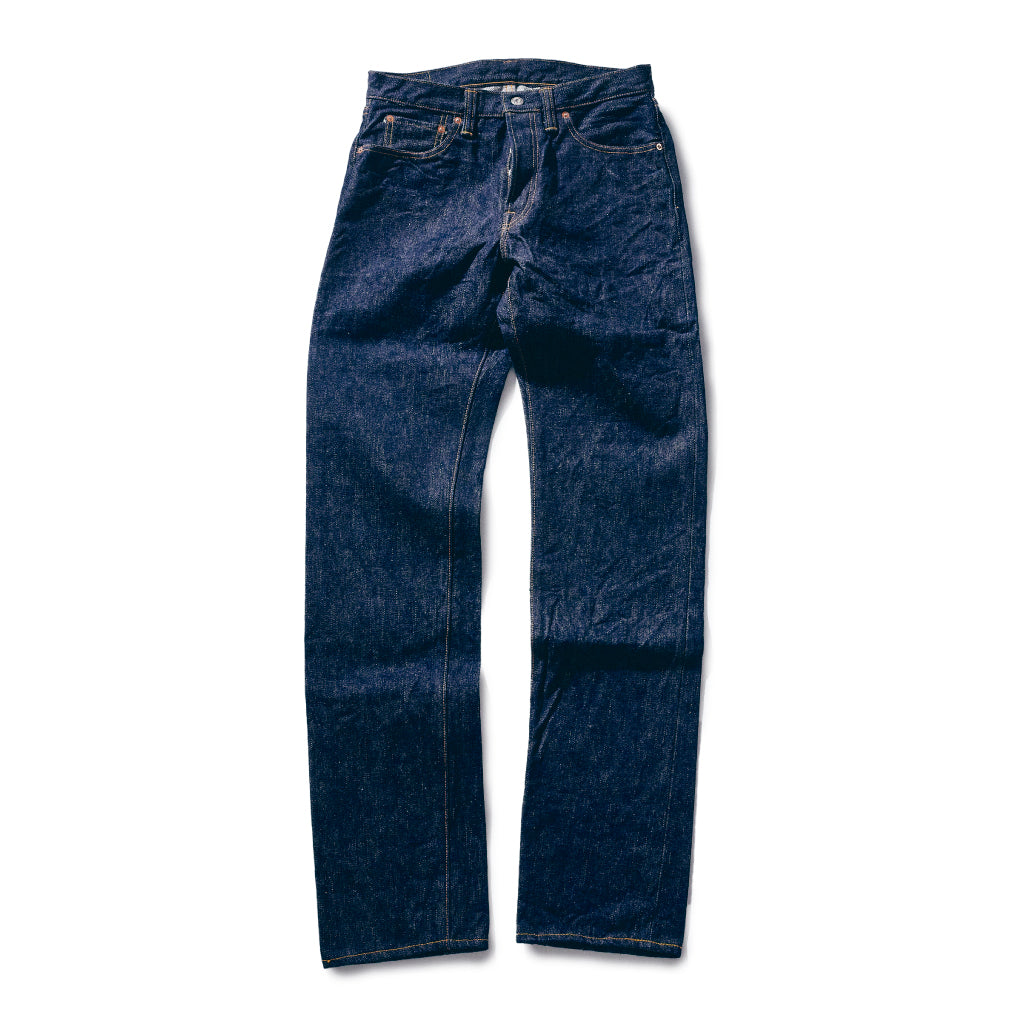
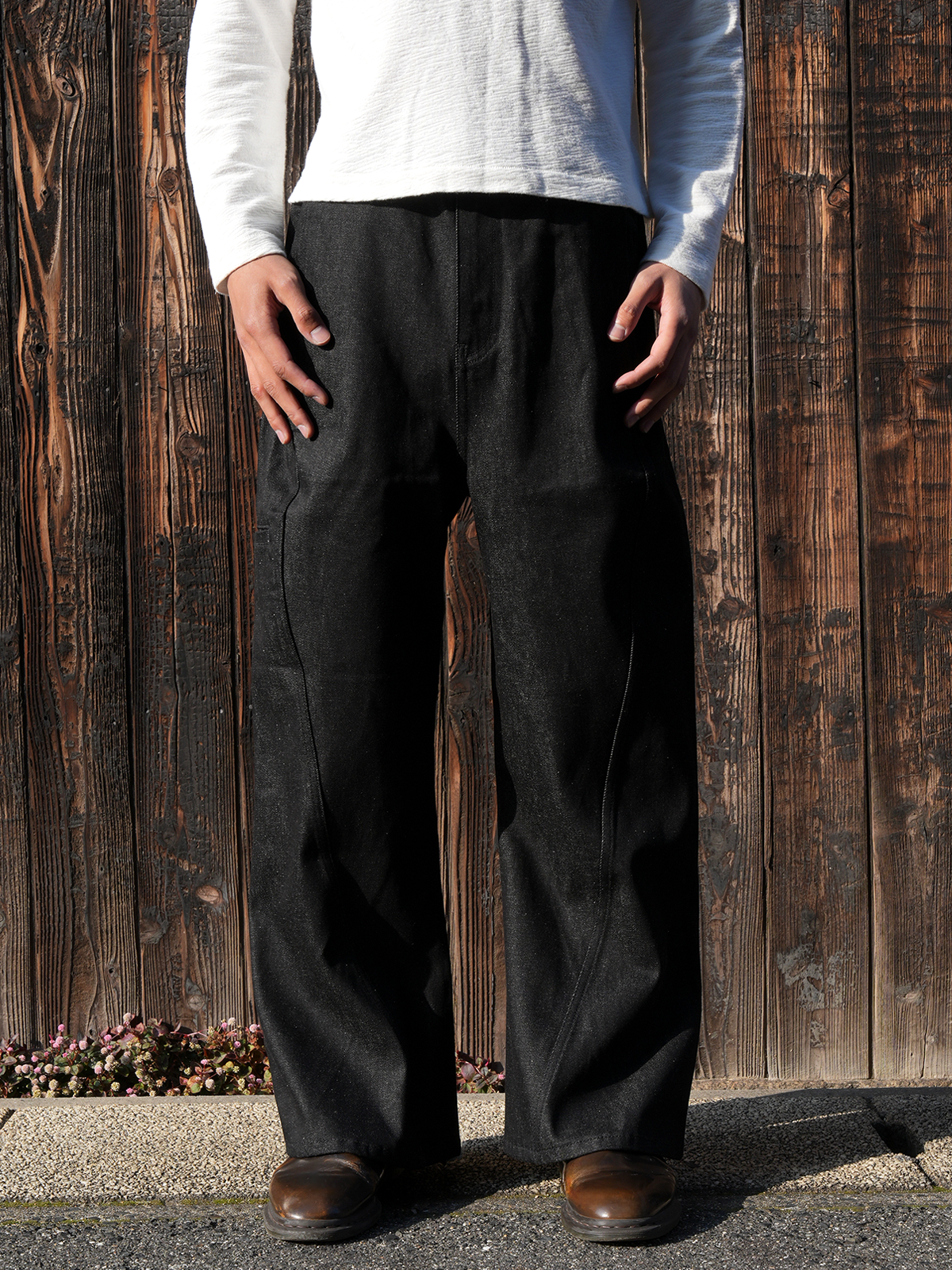
Step back into vintage workwear history with the Lot 704 Denim Trousers by Taiga Takahashi. Inspired by 1920s store-brand workwear like J.C. Penney's Foremost line, these high-rise jeans capture the creative spirit of early American denim. Cut from 100% American organic cotton, they feature a wide-leg silhouette with straight vertical lines running from thigh to hem.
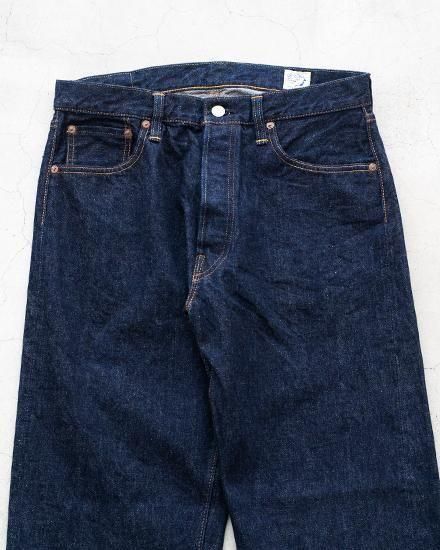
The fabric is woven in Okayama on vintage shuttle looms, producing a light-ounce, 3/1 left twill selvedge denim with a white edge visible on details like the reverse side of the belt. The warp yarn is rope-dyed with indigo mixed with sulfur dye for a weathered, green-cast tone, while the weft uses a custom nep yarn dyed in a yellowed natural color to suggest the passage of time. Together, the two yarns produce Takahashi's signature indigo: deep and rich.
The design stays faithful to the era, with rounded front pockets, a backside cinch buckle, uncoated iron hardware meant to patina with wear, and a mud-dyed leather patch from Amami Oshima Island.
This sanforized denim still holds the natural irregularity of slow-spun cotton yarn. Expect a slight shrinkage of two to three percent after washing.
T.T LOT.704 Denim Trousers, inspired by 1920s denim and Foremost styles by J.C. Penney. Made in Okayama from 100% American organic cotton, 3/1 left-hand twill lightweight selvedge denim woven slowly on an old-style shuttle loom.
The indigo warp yarn is dyed with a sulfur dye blend for a green-cast, weathered appearance and rope-dyed to retain a white core. Custom yellowed natural-color nep weft yarn creates a deep, rich indigo blue with an aged character. Sanforized to reduce shrinkage, with white selvedge detailing used throughout, including on the reverse side of the belt.
High-rise fit with a wide, straight silhouette from thigh to hem, rounded front pockets, and a buckle back. Original engraved iron buttons and hardware are intentionally uncoated to develop patina over time. Features a mud-dyed leather patch from Amami Oshima Island. Shrinkage of approximately 2 to 3% may occur after washing.